

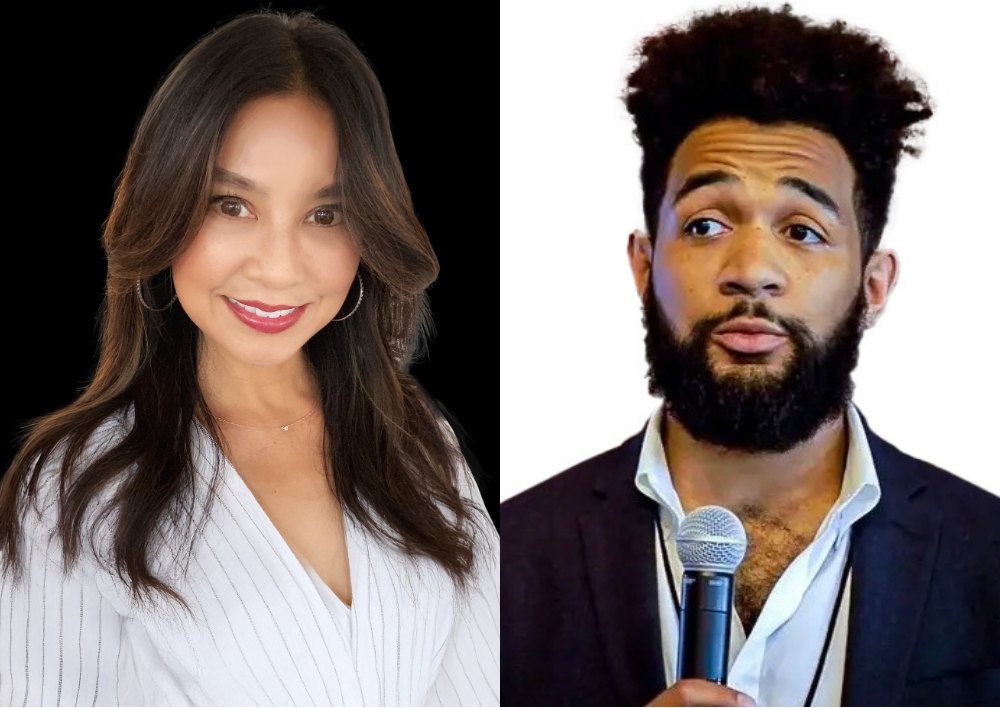
The Power of Presence: Driving Authentic and Inclusive Storytelling
Contributors: Zachary Walker, Highwire; Fermina Phillips, OACC
Part 1
1. When you think about inclusive storytelling, what does “community first” mean to you, and how does it shape the way you approach communications?
Fermina: At the OACC, "community first" means our storytelling originates from the community. It’s a commitment to prioritize and amplify the authentic voices, needs, and diverse perspectives of the people we serve — viewing our artists, cultural practitioners, and audiences as one interconnected community.
This approach is the foundation of our programming and communications strategy. Instead of leading with our organization's brand, we lead with the community's stories. When we invite performers and presenters to participate in programs or exhibitions we do not make suggestions or edits. We want the artists to lead the process, so there is authenticity in what they present.
For example, our communication for the Oakland Ilokana film premiere centered on the power of preserving a Filipina grandmother's oral history. When promoting our annual Lunar New Year x Black History Month event, our messaging highlights the artists and traditions that embody Asian and African-American solidarity.
Zachary: To me, "community first" is the strategic anchor that shifts communication from broadcasting to belonging. This shift is not just a change in strategy, but a new way of understanding audiences in an ever-changing digital world. It's recognizing that the people you're trying to reach aren't just consumers; they're individuals who are exposed to influential voices and culture-makers daily. As marketers, our job is to help our clients get their message to resonate through the noise. This approach not only fosters a sense of belonging but also inspires and motivates the audience to take action. And, as we know from consumers, America's population is becoming increasingly multicultural, reflecting a growing trend toward greater diversity and cultural pluralism. In fact, this recent Forbes article reported that "only 26% of African-Americans, 10% of Hispanics and 3% of Asians feel represented in advertising."
Part of this may be because recent data suggests that 85.4% of the ad industry comprises White advertising professionals, many of whom appear to be simply reflecting their own experiences and subconscious biases in the campaigns they create. This approach is problematic, as it often overlooks the diverse perspectives and lived experiences necessary to create truly inclusive campaigns.
Consumers form deeper connections with brands when they feel seen and understood through advertising. Conversely, when consumers feel consistently excluded, underrepresented, or misrepresented, it breeds negative sentiment toward a brand. This emotional response directly impacts brand loyalty and purchasing decisions, making authentic representation not just a moral imperative but a business necessity.
In my work at Highwire, and across our clients in various industries, this means our strategies are built on listening to our target audiences first, so we can craft messages that connect with them. We treat the most popular social platforms not just as distribution channels, but as real-time research labs. This is essential, because consumers are primarily using social media platforms to form and share opinions, which means brands must meet them there with respect and nuance.
This audience-first? approach ensures that our clients' campaigns don't just speak to a community; indeed; they are truly of that community, driving genuine engagement and brand affinity. Conversations are a two-way street, so as much as we want our target audience to hear our narrative, we have to be willing to listen to what they have to say.
2. In your work with OACC/Highwire, what are some concrete practices you use to ensure cultural fluency and authenticity in storytelling?
Fermina: To ensure cultural fluency and authenticity, our practice relies on two core principles: artist-led creation and prioritizing native terminology.
At OACC, we view our role as one of amplification, not authorship. This means all OACC storytelling is developed by the featured artists and cultural practitioners themselves, which serves to uplift a wide range of authentic AANHPI voices. For example, when planning our Hawaiian Arts and Culture Day, Native Hawaiian artists developed the entire program content. We then ensured all our communications — from social media to press releases — used accurate Hawaiian language to describe the programs shared.
Using the correct, specific native terminology is a fundamental sign of respect and the cornerstone of authentic communication. This collaborative process ensures the narrative always originates directly from the community.
Zachary: At Highwire, the fiercely distinct approach that has helped our clients is structural and data-driven–ensuring authenticity isn't left to chance. We typically rely on three core practices. This emphasis on data-driven practices reassures our clients and audience that our storytelling is not just authentic, but also effective and impactful:
Audience-Specific, Platform Strategy: Authenticity on LinkedIn differs from that of TikTok. Our clients are often industry innovators. We adopt an 'educate, entertain, and/or inform' approach, defining a platform-native POV (Point of View) for each social media platform. More strategically, we recognize that inclusive storytelling is a revenue driver. An ANA/AIMM study of over 1,000 brands found that brands with substantial diversity in their advertising see a 45% increase in brand trust among diverse audiences, which translates directly into performance and ROI.
Insight-Driven Hypotheses and Storytelling: As a member of our agency’s Integrated Solutions team, I’m excited to work closely with our Insights and Analytics department to prioritize grounding every idea in a verifiable cultural insight rather than just a broad demographic target. This involves translating conversations gathered through social listening into a compelling narrative that will resonate in the short time we have their attention. For instance, utilizing vocabulary that's popular among Gen Z consumers (i.e. “No cap” or “bussin” to express excitement about a new product). We used this 'nugget' to create a campaign that resonates with this audience. The key is to uncover the 'nuggets,' or insightful trends, and turn that story into digestible, actionable content for our clients.
Diverse Creator Ecosystems and Governance: Authenticity must be delivered by authentic voices. Our influencer marketing practice helps clients who are actively looking to build relationships with creators who authentically represent their communities. This means not just finding influencers with large followings, but those who truly embody the values and culture of the community they represent. This could look like partnering with a more micro influencer whose audience comprises mainly a diverse audience that is genuinely engaged, instead of choosing a macro influencer whose audience is made up of several sub-target audiences. According to recent findings by Adweek, campaigns that successfully tap into diverse creators, particularly those from underrepresented communities, see significant increases in credibility and engagement. This underscores the importance of representation and the value it brings to our clients — especially for organizations with a global footprint.
About Our Contributors:
As a person of color and marketing leader, Zachary is thrilled to share his unique perspective on leveraging social data and personal experience to build truly equitable and effective communications. Zach’s success leading the social media strategies of iconic brands like Oscar Mayer, Kool-Aid, and Chamberlain has afforded him the opportunity to speak at several business and networking events over the years, including Social Media Week, the SocialRock Conference, multiple virtual panels, and marketing–related podcasts.
Fermina is passionate about brands, people, and products that lead marketing with innovation and social conscience. As a member of the APIA community, she seeks to contribute to cultures that foster diversity, open communication and respect.
Be sure to check out Part 2 of this interview with Fermina Phillips of OACC here.
What Chili's Financial Revival Says About Bold Social Strategy & Consumer Relevance
Let's start with a confession: I didn't step foot into a Chili's until last year. Now, yes, I have stopped at the Chili's in Chicago's O'Hare airport for a pre-flight beverage (IYKYK). But for someone who once thought I'd be living a life similar to The Bear, where sizzle meant success and timing was everything. Back then, I was sweating over an open flame, and today, I'm sweating over how to help our clients stand out in an ever-changing feed.
So when I came across this article on Marketing Brew's website, it instantly took me back to when I finally walked into a Chili's. I saw the red booths, ordered the Triple Dipper and the Presidente Margarita, and it was more than what I envisioned took place inside a casual dining chain. I saw a brand that had cooked up a cultural comeback in real-time, a result of strategic thinking and bold decisions that was showing up across some of the most popular social media channels. And it was deliciously strategic.
And not because Chili's is slinging queso as part of their Dip Trio. They're serving a masterclass in what modern marketing and social media strategy is really about: relevance, resonance, and consistency.
What's Happening: Chili's Comeback Story
Chili's has quietly (and now not-so-quietly) become one of the most impressive brand turnaround stories in recent memory. To set the stage, chains like Chipotle, Cava, and Sweetgreen have reported declines or sharp slowdowns in same‑store sales, plus flat or shrinking customer traffic. Inflation and economic uncertainty are pushing many consumers to re‑evaluate how often and where they dine out.
This has led to 17 consecutive quarters of sales growth for Chili's, with marketing investment rising from $32M to $137M. So what's their secret sauce? A bold, culturally attuned social media strategy that knows when to clap back, when to meme, and when to step aside and let the fans lead.
How They Did It (And Why It Worked)
Chili's social media presence isn't rooted in your traditional social media playbook for what other chain restaurants may be utilizing. Chili's tapped into the kind of agile, insight-driven thinking that we, as social media professionals, have long preached but rarely see executed this well.
Test & Iterate Quickly: Jumping on trending memes, leveraging pop culture, spotlighting the Triple Dipper's fame. Speed beats perfection, and the same is true for social media. Consumers on social love a good (and fast) reaction, so don't let perfect be the enemy of good.
Lead with Value: Their "3 for Me" deal, a simplified menu compared to other chains like The Cheesecake Factory, increased advertising, and promotions are clearly resonating with people looking for affordability + experience. Also, Chili's has leveraged nostalgia, comfort, and familiarity (think red booths, ribs, burgers) so that value doesn't feel cheap. It feels like paying for something you enjoy.
Play the Nostalgia Card: Chili's has leveraged nostalgia, comfort, and familiarity (think red booths, ribs, burgers), so that value doesn't feel cheap. It feels like paying for something you enjoy.
Let the Audience Steer The Online Conversation: Chili's fans and fans of all things cheese loved the iconic cheese pull from their fried mozzarella. And as such, Chili's responded with more of it, introducing their honey-chipotle and Nashville Hot fried mozzarella.
What This Means for Social Media Pros, Brand Leads & Digital Marketers
I've seen what it takes to create a moment on social that resonates beyond just your target audience. And Chili's is doing exactly that. Here's what to take away:
Listen, don't just schedule. Social isn't a soapbox; it's a shared table.
Let your brand take risks. Humor, pop culture, and sass are all fair game when used intentionally.
Think full funnel, but also full experience. What happens on social should match the vibe on-site.,
Let your audience co-create. Stop trying to control the narrative; empower online conversations to happen.
The Chili's playbook on social media works because it connects with its audience. It's emotionally intelligent, creatively confident, and deeply aware of what people want out of a brand right now: joy, value, and a sense that someone's actually paying attention.
For those of us working in social, influencer marketing, and integrated marketing, it's not just a feel-good case study. It's a reminder: you don't need a Super Bowl budget to own the culture. You just need the courage to be present in it.

A Sunny Day at Cannes, and a Cloudy One For Brands and Creator Marketers
Why Tight Budgets and AI Innovation Are Forcing Creator Marketing
It's impossible to ignore the two most powerful forces shaping the marketing landscape right now. On the one hand, we have persistent economic pressure, forcing teams to justify every dollar. On the other hand, we have the explosive rise of Artificial Intelligence (AI), promising a new era of efficiency and creativity.
These aren't separate trends. They are intertwined forces creating a perfect storm that is leading to the most significant—and most innovative—evolution in marketing we've seen in years. The "do more with less" mandate isn't just a challenge; it's a catalyst pushing us toward a more authentic, measurable, and intelligent way of connecting with audiences. But let's not forget the crucial role of our audience, who are at the heart of every marketing decision we make.
The Marketing Squeeze is On: When 'Do More With Less' Becomes Reality
The conversation in every marketing department has indeed shifted. As global ad budgets tighten, brands are not only rethinking but also fundamentally reshaping their strategies. The era of massive, speculative ad buys, where success was often measured by reach alone, is giving way to a relentless focus on return on investment (ROI), a more tangible and measurable indicator of success.
Efficiency is everything these days. With budgets shrinking, the cost-effectiveness and higher engagement rates of creator partnerships are becoming impossible to ignore. It's about making smarter, more targeted investments, and the time to adapt to these new strategies is now, not later.
This dynamic environment highlights the limitations of traditional advertising, where reach is often broad but the actual impact can be challenging to measure. In this economic climate, marketers aren't just seeking exposure; they're looking for genuine influence and provable results that align with an organization's broader business objectives. And this economic reality has set the stage perfectly for the rise of a more effective strategy: creator marketing, a beacon of hope in these challenging times.
Authenticity is the New Performance Metric
When every dollar has to work harder, brands naturally gravitate toward what's proven to be effective. Influencer and creator marketing isn't just a trend anymore; it's a core pillar of a modern, efficient marketing mix. Why? Because it's built on trust.
Creators build genuine communities around shared interests and values. Their brand or product recommendations feel less like ads and more like advice from a knowledgeable friend. In a world saturated with brand messages, this authenticity isn't just a "nice-to-have"—it's a powerful performance driver, reassuring marketers about the effectiveness of their strategies and building trust that directly translates to conversion.
And authenticity as a performance driver has to be a part of the conversation when it comes to creator marketing, just like it is for social media marketing. The data shows that authentic, creator-led content doesn't just feel better; it performs better. It cuts through the noise and builds the trust that is so crucial for conversion
The Smart Amplifier: Leveraging AI to Scale Human Connection with AI
This is where it gets really interesting. At events like the Ad Age Creator Marketing Summit, AI isn't here to replace the human element of creativity; it's here to amplify it, opening up a world of possibilities and excitement for the future of marketing. So if creator marketing is the high-performance vehicle, AI is the navigation system and engine, all in one.
Here's how those in the room view this powerful technology as changing the game:
Smarter Discovery & Matching: Gone are the days of manually searching hashtags. Some of the largest creator marketing platforms leverage AI to now analyze millions of data points to identify the perfect creator partners for a specific brand, audience, and campaign goal, ensuring a better fit from the start. For example, imagine using AI to identify the perfect creator partners, optimize content for specific audiences, and measure campaign impact with incredible accuracy.
Revolutionizing Measurement: AI enables us to go beyond vanity metrics. We can now perform deep sentiment analysis combined with social listening, track brand messaging, and attribute sales with incredible accuracy, finally providing more concrete proof of ROI that leadership demands.
AI as an Amplifier: By combining the authenticity of creator marketing with the power of AI, we as advertisers can unlock unprecedented levels of personalization and efficiency. These platforms should be used in conjunction with the native efforts agencies and marketers are already doing.
We're moving past the era of simply paying for eyeballs. The future is about fostering genuine influence and leveraging technology to do it at scale. The brands that understand this intersection of human connection and evolving technology, like artificial intelligence, will be the ones to win.
Social Media & Influencer Lessons For 2025
Following a year of exciting, and sometimes challenging, changes across the social media landscape, we’re gearing up for another year of social media twists and turns that can make or break your social media marketing efforts.
Here’s what you need to know for 2025 to ensure social media success. Let’s dive in.
Entertain, Educate and Inform
Audiences today turn to nearly every mainstream social platform with one primary motivation: to be entertained. It’s crucial for brands to align their online social media presence with this expectation to prevent your target audience from scrolling past your content and being overlooked.
Sprout Social data shows that 66% of users surveyed said they find “edutainment”—a blend of entertainment and education—to be the most engaging type of content from a brand. At The Motion Agency, we push our clients to create content that leans into this notion, developing content that entertains, educates and/or informs.
Social media is not for copying and pasting content across channels unless a strategic approach is taken. Like any marketing channel, recycling messaging or creative from traditional marketing channels on social media will miss the mark, and you’ll see that reflected in your engagement data–or lack thereof. The most popular social platforms like Instagram, TikTok, X and YouTube demand original, engaging and platform-specific content, especially if you expect your brand’s content to be prioritized in-feed.
This is because consumers on social media value authenticity. Trying to hard sell in a place meant for entertainment is a stretch. Organic content leans into one of those three end goals—education, entertainment, information—and resonates more than targeted ads or promotional-heavy posts. Being authentic across your social channels emphasizes your brand’s commitment to building trust and rapport with your audience before making any promotional requests.
The Power of Organic Content
The content prioritized in-feed across the most popular social media platforms doesn’t happen by accident—or without investment. A striking 91% of consumers say the production quality and budget behind a brand’s social content influence their willingness to engage.
This doesn’t mean every social media post needs a blockbuster budget behind it. However, as consumers, we can often tell when a piece of content feels like it could be a TV commercial and what feels like it was captured on someone’s older iPhone (and this is coming from someone who had their last iPhone for years).
Still, the data does signal that audiences on social media increasingly expect the same care and polish on social media that brands historically reserved for broadcast or out-of-home advertising campaigns. So, to ensure that your content isn’t deprioritized over those in your competitive set, consider asking your team or agency partner these key questions:
Are we building a strong case for increased content production budgets to support our organic and paid social media efforts?
Do we anticipate opportunities to capture additional creative assets to elevate our organic creative and maximize campaign performance?
By prioritizing high-quality content that leans into social media best practices, brands can turn their social media feeds into powerful, performance-driven channels that resonate with today’s discerning audiences while still supporting overall business goals.
Platforms with Purpose
Even in a crowded digital landscape, brands have significant potential to establish meaningful connections and foster vibrant communities across the most popular social media platforms. However, achieving this requires a strategic focus, informed by real-time audience insights. Rather than stretching your efforts thin across every social media platform, it’s essential to identify where your brand’s presence will have the most significant impact.
Consumer engagement with branded content remains as strong as ever, and in some cases, is stronger than it was six months ago. When asked which platforms brands should avoid, the top response was “none.”
Brands are under more pressure than ever to develop content that resonates with consumers best. And that is typically dynamic, short-form video content such Reels, TikToks and Stories, which are resource-intensive. In an effort to keep up, many brands end up repurposing the same images and clips, which can lead to consumers unfollowing or, worse, being completely removed from their consideration set.
As you think about your 2025 social media strategy, here are a few questions to guide your discussions with your internal or agency partner:
When it comes to a platform-specific approach to organic social media content, are we allocating adequate resources to the platforms focused on entertaining and engaging our target audience where they spend the majority of their online time?
Do we have clear data on which platforms our target audience prefers for entertainment, discovery and customer support?
What audience behavior insights have we uncovered in 2024 that can shape our 2025 content strategy?
Are we aligning our overall social media content strategy with platform-specific behaviors and expectations?
What critical insights might we be missing that could refine our platform and content prioritization?
Where do we see opportunities to improve on platforms with the most significant impact?
Concentrating on the social media platforms that matter most to your target audience will save your team precious time and resources, empowering you to deliver authentic content that resonates more deeply and drives measurable results.
Empower Your Internal Team and Agency Partner
Marketers, specifically social media professionals, are on the front lines when engaging with their target audience and often have more visibility into industry or brand challenges. Encourage them to take creative risks and experiment with bold, social-first content strategies rooted in data or insights gained through social listening.
If this is an area of opportunity for your organization, here are some questions to ask your team or agency partner as you prepare to head into 2025:
Are our social teams driving content strategy, or are they limited to fulfilling requests from internal stakeholders that may conflict with social media best practices?
Are our social media efforts being integrated into campaign planning from the outset, or is it an afterthought?
If your team doesn’t have the bandwidth to create the social media content worthy of both your audience and your brand, it may be time to bring an agency partner into the fold. Of course, hiring a partner can be daunting —you need someone you can trust, who knows your business and can jump in quickly. Motion created this free insider’s guide to help you navigate the complexities of a formal RFP process and ensure you hire an agency that is a true partner. Inside, you’ll find strategies and tips for getting organized and keeping your team on task, as well as templates developed by agency-side pros who’ve responded to hundreds of RFPs over the years.
Influencer Marketing
We believe no one understands an audience better than the person who built it. It’s why influencers can persuade their followers to act—and why influencer marketing can be such a powerful tool for brands to reach a wider audience and build trust with potential customers. At Motion, we recommend clients prioritize authenticity by partnering with creators who align with their brand’s voice and target audience.
Unlike traditional advertising, influencer marketing allows brands to tailor their approach to partnerships based on their desired goals, content types, target audience and budget. This could look like structuring partnership agreements to include usage rights so that the brand can repurpose for web or paid ads to boost conversions and overall engagement.
More brands will routinely include paid ad content in their partnership agreements, especially when trying to reach a niche audience with authentic content. For one of our clients at Motion, we recently launched a multi-market influencer campaign where each influencer granted our client permission to run their sponsored content as ads across Meta and TikTok.
Micro vs. Macro Influencers: Understanding the Difference
One of the key things our agency is asked about regarding influencer marketing is, “How do we know who the right partner for our brand is?”
It’s a crucial decision shaped by an influencer campaign’s goals and underpins the recommendations for the ideal partner. Is it better to partner with micro-influencers or macro-influencers? The answer can profoundly shape campaign strategy, brand perception and preferred outcomes.
To level set, micro-influencers are generally considered to have between 1,000 and 20,000 followers on their largest platform, focusing on specific niches and deeply engaged communities. Conversely, macro-influencers are typically considered to have audiences ranging from 250,000 to millions of followers, offering broader appeal and significant reach across various demographics.
But the right influencer partnership goes beyond follower counts. Micro-influencers often build close, personal relationships with their followers, which fosters higher engagement. Macro-influencers provide unparalleled brand visibility and reach due to their larger follower counts but can sometimes have less fully engaged audiences compared to micro-influencers.
Micro-influencers excel in more niche industries or areas of focus, making them perfect for brands targeting specific consumer segments. Their highly engaged audiences often see them as relatable and authentic, driving stronger connections with your brand’s messaging. There are often cost advantages as well, with micro-influencers being more cost-effective, allowing brands to collaborate with influencers across multiple sponsored posts or with multiple influencers in a single campaign. This can increase reach and bring more users into the marketing funnel.
Although micro-influencers bring authenticity, their limited reach can constrain the ability of an influencer marketing campaign to reach its target audience at scale. So, when choosing between micro and macro influencers, align your decision with your campaign goals. If you’re looking to reach a niche audience (e.g., leading small business owners in the HVAC industry), micro-influencers are ideal for targeted engagement and reaching an engaged audience.
If you have a product or service that speaks to a broader audience, partnering with macro-influencers can lead to higher levels of reach and building awareness. But beware that the larger an influencer gets, the more likely their audience will be segmented. For example, the followers on NBA legend Shaquille O’Neill’s accounts may be following him for his basketball accolades, while another group may be following him for his DJ alter-ego, Diesel, and may have no interest in sports-related partnerships.
Quality Over Quantity
The quality of your influencer collaborations often has a more significant impact than the number of partnerships you pursue. So, stretching your budget across multiple small-scale campaigns can dilute the overall effect of your advertising efforts.
Instead, at Motion we recommend focusing on fewer, higher-quality influencer partnerships. At the end of the day, engaging (and authentic) content is what increases your brand’s reach and the opportunity to connect with more users.
So, here’s how to elevate the quality of your campaigns by investing in fewer, more meaningful collaborations. Identify and partner with influencers who genuinely align with your brand’s values and target audience, and work closely with them as partners to ensure that their sponsored content meets both your creative standards and their audience’s expectations. Remember, high-quality visuals and storytelling will help your sponsored content stand out.
Just remember to give influencers the creative freedom to produce content in their own style. This approach leads to more authentic and relatable posts, fostering a deeper connection with their audience.
And from a metrics standpoint, a smaller, more-engaged audience is more valuable than a large, less-engaged one. So, look beyond reach and impressions and prioritize influencers who have a proven track record of higher engagement rates in their sponsored content. These types of collaborations often result in higher engagement and better ROI.
Lastly, we want to define success, which starts before influencer recommendations are even provided. What defines a successful influencer marketing campaign? Here are a few outcomes that an influencer partnership can help you achieve:
Increased brand awareness: Influencers can help get a brand in front of a new audience.
Improved brand reputation: Influencers can help build trust and credibility within a given industry or trade.
Increased conversions and sales: Influencers can persuade their followers to purchase products or services.
We’ve barely scratched the surface when it comes social media and influencer marketing, and as such, it’s critical to focus on what will have the largest impact in achieving your businesses’ goals, rather than hopping on a trend or a new platform just because it’s mentioned in the news.
Social Media News You Can Use: How AI is Skewing Consumer Trust, Instagram Teen Accounts & More
More Adults Trust Big Tech and Media Companies Than the U.S. Government
Consumer data shows that more adults trust Big Tech and media companies than the U.S. government. 70% of U.S. adults trust Amazon, followed by Google (65%) and Netflix (64%)—much higher than trust in the U.S. government (28%).
However, concerns about AI usage underscore the importance of responsible and transparent data usage practices. 70% of U.S. adults have little or no trust in companies to use AI responsibly, according to an October 2023 report by the Pew Research Center. Yet, despite the widespread use of AI at major tech and media companies, consumers still remain trustful of them overall.
This presents opportunities and challenges for marketers as AI continues to shape the advertising landscape. Given where consumers put their trust, marketers and brands alike should look to leverage these trusted platforms for effective campaigns—think retail media ads on Amazon, search ads on Google and CTV ads on Netflix.
Instagram Introduces Teen Accounts for Safer Social Media Use
Instagram is stepping up to protect teens online with its latest update, addressing growing concerns about social media’s impact on young users. The platform is introducing a new, more advanced protection mode for all teen accounts, designed to limit who can contact them, what content they can see and how much time they spend on the app.
The new teen mode comes with six key restrictions:
Accounts are automatically private.
Messages are limited to only people they follow.
Sensitive content controls are turned on.
Filters for offensive words and phrases.
Time limit notifications after 60 minutes per day.
Sleep mode activated between 10 p.m. and 7 a.m.
Teens under 16 will need parental permission to turn these restrictions off. These updates aim to create a safer space for teens, but will it keep them hooked or drive them to explore other platforms? Time will tell!
New Report Highlights Key 2024 Video Content Trends
Tubular Labs published its latest report on the state of social media video and the drivers behind video engagement across all major social apps. Tubular Labs provides insights to help power content strategies, with a database that now includes over 11 billion videos, from 28 million content creators.
Here is what they found:
Longer Short-Form Videos: On YouTube, videos over 30 seconds increased engagement by 39%, while TikTok sees more clips between one and two minutes, suggesting users may prefer slightly longer content than the traditional short-form.
TikTok Trends: Business and finance content is rising, with popular topics including young home ownership and viral finance tips.
Instagram and Meta AI: Instagram engagement is up, partly due to Meta’s AI recommendations, which now curate 50% of content on Instagram feeds. Facebook video uploads have also increased, possibly due to the success of Reels and a shift in user behavior.
Thanks again for spending time reading this latest update! If you enjoyed this week’s “news can use,” you won’t want to miss the latest on TikTok in my blog update surrounding the latest legislation that is forcing TikTok to be sold or be banned in the United States. Or check out more of my writing here.

Social Media and Influencer Marketing News You Can Use in August
We’re back with some more news you can use, where we’ll cover the latest social media and influencer marketing news that you need to be aware of as we start the month of August.
This week, we look at how the Olympics are being featured on X, Instagram testing a new feature for Reels, and Reddit makes an AI-relataed acquisition.
X Shares Insights into Olympics Engagement
Despite recent struggles, X is leveraging the 2024 Paris Olympics to showcase its advertising potential. Buoyed by record-high engagement numbers for the Olympics during the event, X aims to attract advertisers wary of the platform.
Engagement Surge: X reports a significant increase in platform activity surrounding the Olympics, with "a global audience tuned in...to share memes and reactions." This surge presents a lucrative opportunity for brands seeking audience engagement.
Portal to Paris: Addressing the need for focused Olympic content, X launched a dedicated space featuring trends and clips. "Trend Genius" also allows brands to insert ads alongside trending topics dynamically.
Targeted Ad Placement: X allows advertisers to tailor campaigns by associating them with specific athletes, sports, or sponsored teams.
Looking Ahead, the coming weeks will be crucial for X and Elon Musk. Success in capitalizing on Olympic hype could revitalize its ad business. Advertisers will closely monitor X's performance to determine if it can re-establish itself as a viable advertising platform.
Instagram Tests New Reels Filter for Posts with Notes
Instagram is doubling down on its Notes feature. Instagram rolled out Notes on Reels earlier this month, which enables users to leave comments and remarks on Reels (and feed posts too) that their connections are then able to see. This is no surprise, given the feature's popularity, especially among younger users.
Introduced earlier this month, Notes allows users to share short-form text posts with their followers. While the feature has been met with mixed reactions, it's clear that Instagram is heavily invested in its growth. With teens posting Notes at a staggering 10 times the rate of older users, the platform prioritizes features that resonate with this younger demographic.
Ultimately, Instagram's focus on Notes is a strategic move to retain its young user base and compete with platforms like TikTok. Whether you're a fan of Notes or not, it's clear that the feature is here to stay and will likely become even more prominent in the future.
Reddit Acquires Creative Optimization Company Memorable AI
Reddit's recent acquisition of Memorable AI signals a significant step in bolstering its advertising capabilities. For brands, this move empowers advertisers on the platform with new AI-driven tools to plan, optimize, and enhance creative assets, ultimately leading to improved campaign performance. Reddit made acquisitions before becoming a publicly traded company, but this is the first since then. Some of the takeaways from the Marketing Brew article that explain the "so what" behind the acquisition:
Proven Track Record: Memorable AI has already demonstrated its effectiveness through partnerships with major brands like L'Oréal and Unilever, providing a vote of confidence in its capabilities to advertisers who are new to the platform.
Strategic Expansion: This marks Reddit's first acquisition as a publicly traded company and follows previous investments in machine learning, natural language processing, and contextual advertising technologies. While it's still unclear how Reddit will use these new capabilities, they complement each other.
Attracting Performance Marketers: This acquisition is not just about enhancing its advertising capabilities, but also about aligning with its strategic focus. Reddit is keen on attracting performance-oriented advertisers who value measurable results. This is particularly important for many B2C brands, where accurately showing results at each stage of the funnel is a top priority.
Thanks again for spending time reading this latest update! If you enjoyed this week’s “news can use,” you won’t want to miss the latest on TikTok in my blog update surrounding the latest legislation that is forcing TikTok to be sold or be banned in the United States. Or check out more of my writing here.
