


4 Social Media Tips & Trends Worth Knowing
Welcome back! It’s been a little bit since my last blog post, but I have more social media insights and trends to share with you.
See below for more info!
Instagram Releases New Shopping Feature “Drops”
Similar to Supreme, Telfar, and many other brands, Instagram enables brands on their platform to create hype around seasonal product releases.
According to Instagram, “Instagram Drops” will help users discover more products, see what’s coming, sign up for reminders and view the newest products and collections that are already available on the app.”
As brands look to expand into merchandising and swag for their most passionate fans, there are opportunities for consumer-packaged goods (CPG) brands to create some engagement and excitement around exclusive gear.
8 Social Media Content Ideas to Incorporate
Buffer provided some thought-starters for brands to create content effectively and incorporate it into a social media strategy. Our teams have already done a few of these things in one shape or another, like making videos, using engagement prompts, and sharing company news.
There is an excellent opportunity for small business owners and social media marketers to implement these things more systematically. Our teams are looking at ways to do so for upcoming content calendars.
How To Grow and Engage an Audience On Instagram
Social Media Examiner shared are some tactical ways we can continue to grow our audience on Instagram. Similar to the above article, these might be things your brand is already doing through social media content. Tactics like encouraging user engagement through social media posts, asking questions, and responding to DMs, Comments, and Mentions.
Instagram Outlines How Its Search Algorithm Works
In another opportunity to have a peek behind the curtains, Social Media Today put some info together on how Instagram’s search algorithms work and how brands can optimize for better discoverability.
Last year, Instagram expanded its search options to show a broader set of relevant keyword matches instead of being limited to profiles, hashtags, and geographic locations. Instagram is now looking to display an even more comprehensive range of results based on your query.
"We're making search results better for exploration. For example, a search for "space" will show you space-related photos and videos, too. This is especially helpful when you don't have an exact username or hashtag in mind when searching for a certain topic."
A critical tip regarding keywords and hashtags from Instagram: "For a post to be found in Search, put keywords and hashtags in the caption, not the comments."
Let me know in the comments if you plan on implementing any of the above or if you have any useful social media tips worth sharing.

5 Social Media Trends For The 2nd Half of 2021
As we head into the secondnd half of 2021, I've felt re-energized and excited to discuss all things marketing and social media! Hopefully, you're feeling a similar energy and looking to improve on your social media strategy. So, without further ado, let's get into 5 Social Media Trends Heading Into The Second Half of the Year.
1) Direct To Consumer (D2C) For All Brands
The pandemic caused a drastic shift in how consumers engage with brands and vice-versa. Consumers who had never ordered an item felt compelled to due to a variety of reasons. People were looking to limit the number of times they could be potentially exposed to COVID-19, and online shopping gave them a safe way to get the items they needed or wanted.
Even if you were wearing double masks and gloves while you went outside, there was such a demand for essential products like soap, toilet paper, paper towels, and cleaning wipes that you couldn't even find what you were looking for. So is it any surprise that so many CPG brands saw record profits over the last year?
Other brands that succeeded were those that were already engaging with their customers through online shopping channels. Specifically, Direct-To-Consumer (D2C) brands were not only seeing continued sales during the pandemic, but they also saw an increase in new customers as consumers looked to new brands for their shopping needs.

If you haven’t seen Magic Spoon Cereal in your local grocery store, that’s not a surprise. This D2C cereal brand grew its customer base over the last year.
When I was working at Grassroots Cannabis at the start of the pandemic, after our businesses were deemed essential, we saw a dramatic shift in consumer shopping behavior. We went from roughly 30% online orders to approximately 70% online orders within the first few months of lockdown.
There was already data showing that brick-and-mortar shopping was decreasing, and the pandemic only accelerated that timeline. So now more than ever, brands are looking to establish a D2C strategy regardless of size. From Mom and Pop shops to global brands like Nike, who recently closed wholesale accounts with department and online stores to focus on their D2C efforts.
2) The Rise of Reddit
When I first provided some social media tips in 2020 , I didn't touch on Reddit and how advertisers were already flocking to the platform. Fast-forward nearly a year later, and that still rings true.
According to Reddit research, the platform expects significant growth across its niche communities. And is fastly developing additional ad products and improving target capabilities for advertisers.
Since then, brands in various industries have allocated marketing spend to Reddit as a platform and have also executed platform-specific campaigns that have grabbed the attention of millions and achieved actionable business goals. CPG brands like Welch's, Pepsi, and Absolut use Reddit to successfully reach individuals of all ages and drive positive brand sentiment.
For Welch's , the brand utilized video assets targeted at Gen X men on relevant subreddits and enabled users to engage with the brand directly by enabling comments on their ads.

Welch’s sparked conversation and opened a direct conversation with the brand by enabling comments on their ads.
The campaign drove a higher than average View Through Rate and doubled the average Completion Rate for videos compared to Reddit benchmarks. And drove a 94% positive brand sentiment among comments in their engagement prompts.
Reddit isn't just useful for awareness-driving, top-of-the-funnel campaigns but also for driving conversions at the bottom.

A post on the MeUndies Subreddit, where a user compares the brand to another competitor, Lululemon. Nearly “identical” products, so why not go with the significantly cheaper brand.
MeUndies, a D2C online underwear and loungewear company, utilized Reddit conversion ads to drive purchases. The ads ran as promoted posts and utilized interest-based targeting, focusing on a variety of relevant subreddits. By optimizing towards CPA and ROAS goals, the MeUndies team was able to reach efficient CPAs.
By the end of the campaign, MeUndies saw a 60% lower Cost-Per-Click (CPC), a 5.6x Click-Through-Rate, and 61% more effective Cost Per 1000 Impressions (CPM)s, when compared to platform benchmarks.
When it comes to Reddit, I am an avid user and a beginner when advertising on the platform. I look forward to sharing insights and results of my first Reddit campaign!
3) Shoppable Social Will Continue To Grow
Even for brands that plan to utilize brick-and-mortar locations, retail e-commerce is here to stay. If anything, it's only going to get bigger. According to Statista data of retail sales worldwide, projections show that the United States alone will go from $374 billion to $407 billion by next year. By 2023, the U.S. alone will account for nearly 22% of global sales.
We'll see this global trend continue to shape the most popular social media platforms in 2021. For example, on Facebook and Instagram, integrated shopping already exists through Facebook Shops and Instagram Shopping. Both enable users to purchase products directly from within the app.
On Pinterest, consumers are already actively looking for inspiration and are closer to purchase than users on other social media platforms. According to platform research, 89% percent of Pinterest users actively look to purchase while on the platform.

The Pinterest business page for Parachute, a Bedding and Home company, enables Pinners to not only get visual inspiration for their products, but also make a purchase from within the platform.
And advertisers are already utilizing the platform's social commerce tools, including Product Pins and ad units that take consumers to Product Detail Pages (PDPs) or a landing page where a Digital Free Standing Insert (DFSI ) can house a coupon for a variety of retailers.
Pinterest also launched Shopify integration for brands on the platform and enabled marketers to add their products or catalogs to a Pinterest Business Page.
And according to Sprout Social data, nearly 80% of executives surveyed expected to be selling their products or services on social media within the next three years. For other platforms like TikTok, Snapchat, and potentially Twitter, engineering teams across these companies are developing new innovative ways for consumers to purchase products directly within an app.
4) TikTok Isn't Going Anywhere
Despite the rocky year TikTok had over the last year and potentially getting banned, the platform and business as a whole seem to be making the correct steps to further establish themselves as a home for advertisers.
With nearly 700 million monthly active users and 65 million of those being in the U.S., there's an opportunity for brands to reach an active, engaged, and growing audience. A recent study shows that TikTok users spend roughly 46 minutes a day scrolling through the app, giving brands an excellent opportunity to show up in their target audience's feed.

Idahoan partnered with influencers on TikTok to help reach a younger audience for their Instant Mashed Potatoes through authentic and engaging content.
TikTok's growth seems poised to continue, with the social media company hiring key employees from other social media platforms. And more of my clients continue to ask, "Should/Can we activate on TikTok as a brand?" From an advertising perspective, TikTok has much more competitive costs when it comes to Costs Per 1000 Impressions (CPM). And advertising on the platform is becoming accessible for brands of all sizes.
From a content perspective, brands utilizing influencer marketing, and User Generated Content (UGC) continue to succeed on the platform, reaching millions of consumers.
5) Data Privacy Will Be A Focal Point
When I first started my professional career as a digital marketer for a FinTech startup working to solve a global issue, data breaches, and privacy. Little did I know that nearly a decade later, the same trends I saw back then are just as important now.
After the iOS 14 privacy update through Apple, consumers have been opting out of being tracked by advertisers. So far, data seems to show that roughly 96% of U.S. consumers have opted out of some form of tracking on their mobile device in iOS 14.5, and the impact that will have on marketers is still unknown.
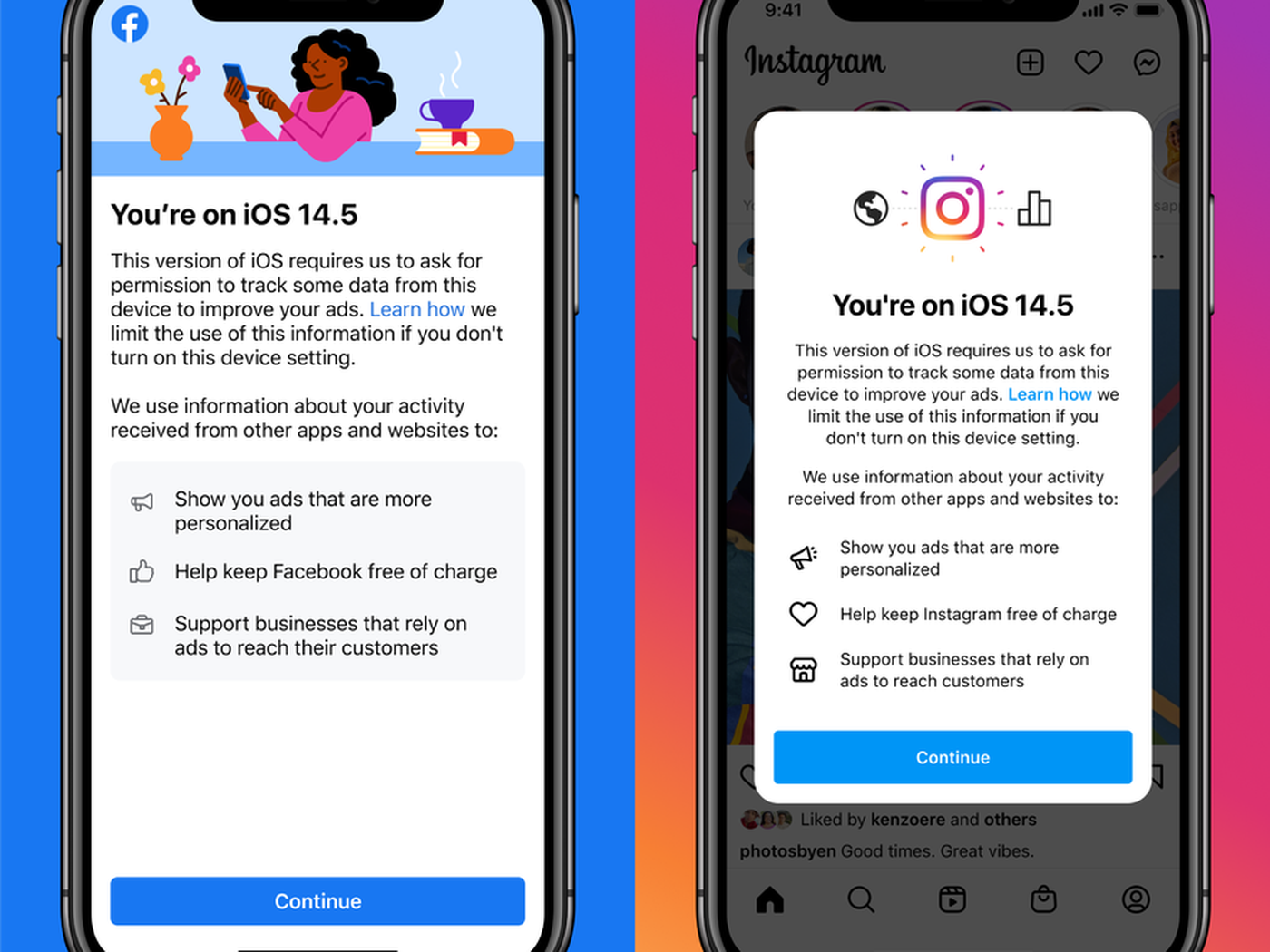
Have you decided to opt out of tracking when it comes to the apps you use on your devices?
And in Washington, a bipartisan group of Senators is looking to reintroduce the Social Media Privacy Protection and Consumer Rights Act, to protect consumer data privacy when collected by large tech companies like Facebook and Google.
This is already affecting how social media platforms and if you're actively running campaigns, you've seen the updates, pop-ups, and emails from Facebook. However, when it comes to targeting on paid social, audience options are limited, and once used, audience insights and cross-channel attribution are becoming more difficult to utilize effectively.
To counter this, we could expect social media platforms to showcase new identity and tracking capabilities. For brands and digital marketers to utilize first-party data for what would now be considered "traditional" targeting a more personalized experience.

Influencer Marketing: What You Need To Know
Like most marketing activities, influencer marketing can be very beneficial for a brand when done correctly. From helping spread word-of-mouth through a blog or piece of social content to driving an increase of overall awareness for a brand. Influencer marketing enables a company to insert itself authentically through the interests of its target audience.
When talking to my clients, they viewed influencer marketing as something only fit for well-known brands like Nordstrom, Crown Royal, and Target. But that shouldn't scare you, and I'll tell you why. Even more so during COVID-19, as consumers are switching brands at an unprecedented rate.

With 75% of consumers having tried a new shopping behavior, like one the above, this is an opportunity for brands to reach new consumers.
From a brand's perspective, the goal is to partner with influencers who fully embody the brand's personality and essence. And by working with various influencers, brands can reach new customers and increase overall brand awareness.
Real-life Examples
For one of the spirit brands I worked on, our strategic approach was to take advantage of relevant events and pop-culture experiences. In particular, this brand would use influencer marketing to insert itself authentically through its target audience's interests.
To find influencers that were already loyal fans of the brand and embodied its spirit, I recommended taking a two-pronged approach:
1) Leveraging our agency network to identify, research, and vet potential influencers in a 1:1 capacity
2) Partnering with a 3rd party, influencer marketing company to help us do the same as above, but at a larger scale
To set out for this spirit brand, we needed to establish our goals for this influencer campaign:
Drive awareness and build brand affinity for this particular spirit brand
Become the social brand with the brand’s consumer base (young adults 21-29) when they go out to the bars
Assist in driving on-premise sales and an increase in overall consumption
Inform and educate consumer base about intriguing retail activations (special edition bottles, programs, events)
During my time leading all things Social Media and Influencer Marketing at Grassroots Cannabis, our goal was similar:
Raise awareness and build brand affinity for our cultivator and dispensary brands
Increase in overall patient registrations across all dispensary locations
Drive product sell-through to consumers (share of product sold to medical patients and recreational patrons)
Inform and educate consumer base on interesting retail activations (new product releases, programs, community events,)
Identifying Your Target Audience?
Understanding your target audience will enable you to identify the right influencers for your brand. For larger brands or those in unique industries, this often means your target audience can be more complicated.
Within the cannabis industry, we had three unique target audiences;
Consumers who look to cannabis as medical treatment (think patients with debilitating illnesses)
Consumers who look to cannabis for wellness (think of the millennial mom who would rather unwind with an edible instead of a glass of red wine)
Consumers who look to cannabis in a more recreational aspect (this is when you think of your stereotypical ‘stoner’)
We wanted our influencers to appeal to at least 1 of these key target audiences. Digging even deeper into those target audiences, we also had to take into account other key demographics. For example, across the 11 states one of the dispensary brands we operate, our footprint and target consumer varied widely.

Jasyra (@Fit4Arn) shared her influencer content for Herbology Dispensary, becoming one of her most engaged (comments + likes) posts on her page.
In Pennsylvania, the median household income for those near one of our dispensaries was $36,258/yr. Less than a two hour drive at another dispensary we operated, the median household income was $72,948/yr. What this means is that we were challenged to identify influencers in Pennsylvania that would resonate with consumers at each median household income.
Switching gears to the spirit brand I worked on, our target audience was:
• Young, Legal Drinking Age (LDA) – 29, All Genders (heavier initial focus on male), Intellectual & Blue Collar
• Urban & rural – over-indexing in college/university markets
• Consumes alcohol before going out to the bar, house-parties, celebratory occasions, while partaking in outdoor sporting activities, especially in cold weather
To dive deeper into our audience, we set out to understand better which interest verticals would resonate best with them. In the agency world, using the services provided by Mediamark Research and Intelligence (MRI) to identify key interests that index highest with our target audience.
Using MRI, we could then deduce key thematics within each category. As we evaluated potential influencers, we will see which influencers align with the potential verticals listed here.
How To Identify Your Potential Influencers?
We know who our target audience is, and now we need to identify potential influencers whose content would resonate with. What that means is each influencer you partner with has to embody the brand's personality.
These influencers need to reside in and can execute against priority markets. You can identify influencers that fall under specific verticals (e.g. interested in Punk music, Tattoo Enthusiasts, Gamers, Sports Fans) with the help of a 3rd party influencer marketing like Popular Pays or Tagger.
Finding influencers on a site like Popular Pays that have a specific interest, we could then select influencers with specific demographic traits (e.g., African-American, Hispanic, LGBTQ+)
Partnering With A 3rd Party Vendor
Have a small team running your influencer marketing efforts, or are you leading things on your own? Executing on influencer marketing is both labor and time-intensive, and most likely, you're working on multiple brands at once. To help agencies or brands scale their influencer efforts, an ecosystem of influencer marketing companies have sprouted up to do just that.
One of the key players in the space is Popular Pays. Popular Pays has worked with various brands, including Google, Macy's, New Balance, and many more. Including three brands I've personally worked on throughout my career.

Kevin (@turnone) shared his influencer content following a visit to one of the Pennsylvania Herbology locations. This visually-stunning creative was made possible in thanks to Popular Pays.
Working with Popular Pays, our agencies would partner with influencers across multiple verticals to create content for our clients' initiatives. Similar to how an agency operates, Popular Pays works by having agencies or brands create a brief, detailing the brand’s influencer marketing goals and objectives.
After creating a brief, these influencers will be vetted through an application process and shared with Popular Pays 6,000 + content creators. For more information about Popular Pays, you can visit their website by clicking here.
1:1 Partnerships
In conjunction with partnering with a 3rd party like Popular Pays or Taggr, working with an influencer directly, in a 1:1 capacity will help you achieve a brand’s influencer goals. Think of it as catching fish with a large net (Popular Pays) compared to using a fishing line (1:1 relationships). Both are capable of catching fish, but you might end up catching fish you may not be looking for using a large net, however.
So what does 1:1 influencer marketing involve? From start to finish, we’re talking about:
Identifying Influencers - Similar to how Popular Pays operates, you will need to search across social media to identify potential influencers. These individuals may already be following or tagging said brand in their personal content. As marketers, do some digging and look for other influencers who might not know of said brand yet but would be fans of their product or service.
Influencer Outreach - Once those influencers have been identified, there then needs to be some outreach to start a conversation with each influencer. If you genuinely think they're a good fit for the brand, engage (like and comment) with their relevant content.
Influencer Negotiation - Once identified and having started a conversation with these influencers, look to set up a meeting so you can get to know each influencers on a personal level better. And at the same time, express to these influencers why partnering with them makes sense for said brand. Look to schedule follow-up meetings to help negotiate contracts.
Influencer Management & Coordination – This is everything from negotiation contracts, product fulfillment, reviewing the social content they'll create for a brand, and the most crucial part, fulfilling all obligations for compensation.
Influencer content we put together for Oscar Mayer, where we identified food influencers, like HellthyJunkFood who specialized in unique recipes.
A recent report regarding influencer compensation has shined a light on influencer compensation, based on respondents in the Sub-Saharan African influencer industry. The report was put together by PLAQD, and some of the insights can help marketers across the globe regarding influencer compensation:
Nearly 95% of influencers listed they would rather be compensated for their time (to cover travel costs + expenses) over an all-expenses-paid trip with no cash compensation
Roughly half (53% ) of influencers surveyed said they would not work with competing brands following a partnership with another brand
Nearly 70% of brands surveyed reported they manage their influencer campaigns in-house. This figure is up 25% compared to last year, according to a 2019 SocialPubli survey
70% of brands reported that they would increase their influencer spend to end the calendar year
TIP: When working with influencers in a 1:1 capacity, many digital marketers adhere to the one cent per follower (or $100 per 10K or $1,000 per 100k followers) rule. Note this is only a starting point and compensation can change due to the size and length of the campaign.
Forms of Collaboration
Now the fun part, how to collaborate with influencers to create unique content and reach a new audience. There are 3 general ways brands can partner with influencers:
Posting Content - Posting organic content to raise overall awareness is one of the most popular ways to collaborate with influencers. Depending on your goals, this could be a single Instagram post or a series of social posts over an allotted amount of time to promote whatever event or product the brand wants to push. It is an endorsement, but the risk comes when picking the correct influencer to partner with.
Posting content in this manner tends to hold less monetary risk due to the investment level, and is extremely scalable.
Content Takeover - Takeovers can work multiple ways; either by inserting the brand into an influencer's content/blog/live show, becoming a partner. Or by allowing an influencer to take over a brand’s content for an allotted period (mainly around live events or campaign launches).
Content takeovers are a great way to shake up a brand and what is usually associated with it. They can also be used as a temperature test if a brand wants to go further with a particular influencer. If the influencer’s content takeover is driving more impressions or engagements than other sponsored content, there might have a good fit for the long-term.
Content Series/Digital Endorser - This level of collaboration is the most in-depth as it gives brands a voice outside of their traditional marketing channels. These influencers help with creative direction and content production by being a leader. Becoming the centerpiece within the content, alongside the product. This type of collaboration is typically a much longer relationship compared to the other types of influencer engagement relationships mentioned above.
A content series like this can also includes costs that are on the higher end of the influencer campaign scale, with pay being closer to that of a brand ambassador.

Mike Malcolm (@mikegdagod) of WeedTravelFood, created sponsored content (in-feed and Story) for Grassroots Cannabis, visiting a Windy City Cannabis dispensary.
What To Monitor For
We've set our goals for an influencer marketing campaign, identified what type of influencers we should be looking for (similar interests to our audience), and we've established how we're going to partner with these individuals (3rd Party partners + 1:1 relationships).
Once an influencer's content goes live, analysis and measurement come into play. Here are a couple of tips you can use when reviewing your influencer's content:
● Look at the conversations from each influencer's following and community to use as inspiration for creative ideation to better target your audience with a brand’s owned content
● Each piece of content created is an opportunity to insert your influencer's content into your brand's feed as organic content. Not only does this help fill out a content calendar but also extends the lifespan of the influencer's creative by exposing it to a brand's audience
● If the brands is a chain or has multiple locations, leverage influencers' local influence to promote a specific locations by creating paid ads with their creative, this can also avoid showing favoritism
Measuring Success
When looking to report on the success of your influencer's content, there are usually 3 leading key-performance indicators (KPIs) that you will track.
● Engagement Rate: That includes all likes, reactions, comments, retweets, shares, video views for each piece of content, compared against the reach garnered
● Brand Sentiment: Using a social listening tool, like Crimson-Hexagon, or even just manually looking at the comments in-feed to see how people talk about your brand in the digital world. The goal is to monitor to see any lift during the timeframe of the campaign
● Reach: This looking at the number of times your influencers' content is viewed in feed
You will most likely have additional KPIs that are specific to your brand or industry.
During my time at Grassroots Cannabis, the KPIs we established for our dispensary brands included tracking the number of new patient registrations. For our cultivation brand, another KPI was to track product sell-in to the dispensaries we partnered with (share of our product sold to various dispensaries).
As we head into the final months of 2020, it seems as if marketing efforts, specifically around social media and influencer marketing, are increasing. And yet, we've barely scratched the surface when it comes to influencer marketing, and I look forward to sharing more industry insights.
For more ways to improve your social media efforts, check out this blog post to maximize your organic and paid social media efforts.

Social Media Tips: Continued
Following my first blog post covering platform-specific social media tips, I want to touch on an aspect of social media that a lot of my professional and consulting clients ask about, influencer marketing.
Like most marketing activities, working with influencers can be very beneficial for a brand when done correctly. From helping spread word-of-mouth through a blog or social content to driving an increase of overall awareness for a brand. Influencer marketing enables a company to insert itself authentically through the interests of its target audience.
Let me guess when you think of influencer marketing, you think of well-known brands like Nordstrom, Crown Royal, and Target, but that shouldn't scare you, and I'll tell you why.
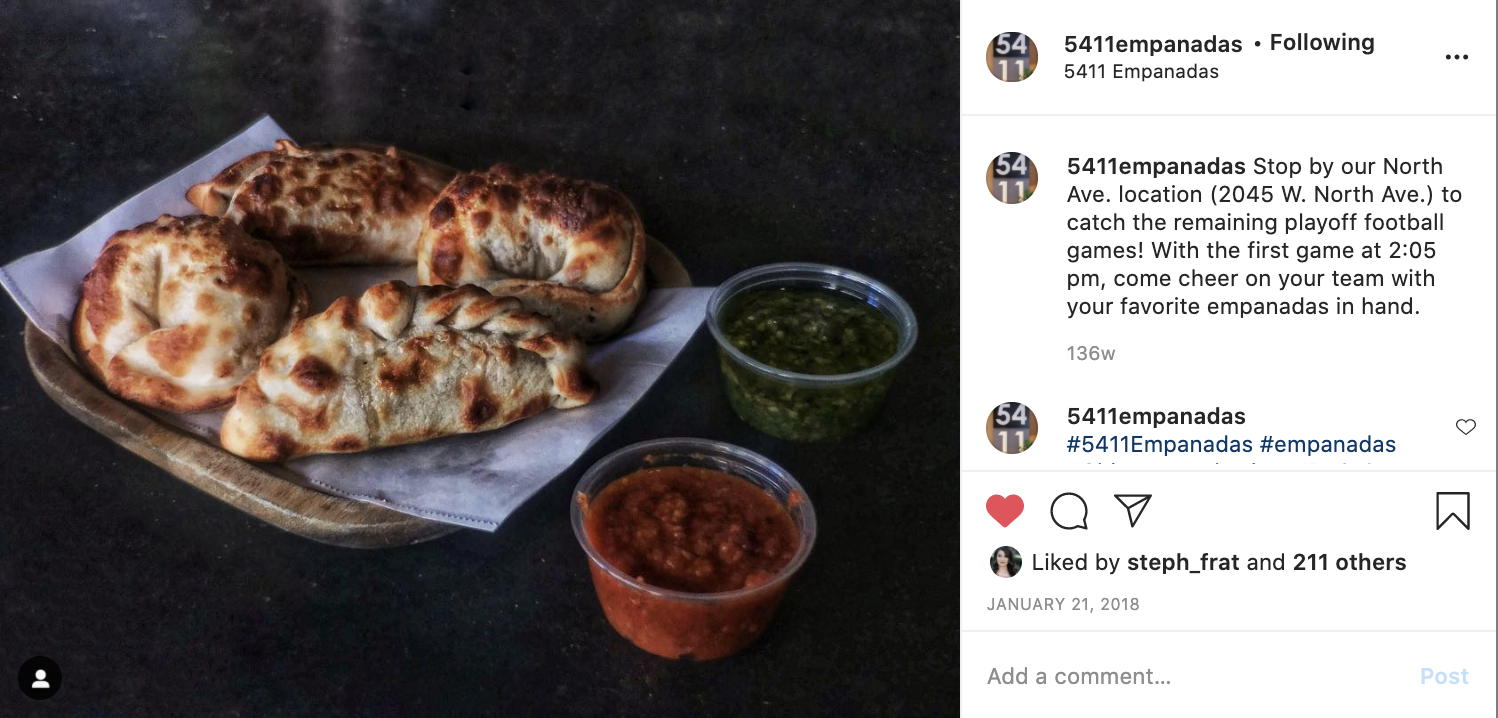
One of my content shoots from 5411 Empanadas, a Chicago restaurant with multiple locations.
One of my former consulting clients is a co-owner of a multi-location, quick-service restaurant in Chicago, 5411 Empanadas, and was interested in influencer partnerships to promote a new product launch. But it needed to happen with a limited budget in mind. With some determination and social listening, I was able to do just that for my client.
I did it by identifying and reaching out to up and coming food and beverage influencers in Chicago with smaller follower counts; we're talking less than 3,000 on Instagram, similar to a micro-influencer.
In exchange for a free meal and the opportunity to capture some photo and video content at one of the restaurant's locations, my client received User-Generated Content (UGC) to share on their restaurant's social channels, and we earned additional reach through the influencers' social channels as well.
To wrap up this section on influencer marketing, I wanted to share a more tactical approach to building brand advocates for small businesses.
Brand Advocates
Like user-generated content, brand advocates are low-cost, and if you're lucky, a free marketing tool can help your business. Brand advocates are your most faithful and intense customers, who will take action if asked. The customers leaving positive feedback on a brand's comments or the Amazon review section are brand advocates.
Most small to midsize businesses lack the resources to either hire a large client success team or pay for chatbots to handle the heavy lifting. An absence of either can result in lost leads and lost sales, but you can level the playing field by utilizing brand advocates. They can be vital to the success of businesses, especially those with limited marketing budgets. Here's how:
Unlike influencers or brand ambassadors, brand advocates engage with a brand because they genuinely love it. These brand advocates can have a sphere of influence themselves but on a much more micro level.

A Fireball Whisky brand advocate, excited about our “Surprise & Delight” kit we sent him.
Like this Fireball Whisky fan above, brand advocates are people who find a way to talk about their experiences and satisfaction with your brand, no matter the scenario. Brand advocates often lead to new customers through word of mouth marketing (WOMM).
They can help build brand affinity, increase overall awareness, and assist in supporting new product launches.
So let's talk about the benefits of a brand advocacy program in the real world and how it can benefit your business. I think a brand that does a great job at building brand advocacy is the shoe company Toms. Those who don't know the company, Toms started in California with both a unique style of shoes and a great category differentiator.

How Toms continues to do social good, even during COVID-19.
Tom's will donate another pair of their shoes to a person in a developing country for every pair of Toms shoes purchased on their site. Even now, during COVID-19, Toms is finding ways to take their profits and turn it into a social good by purchasing personal-protective equipment (PPE).
When thinking about what "reward" your customer could receive for buying your product, it can be something tangible like a coupon for a future visit or points towards a loyalty program. But it can also be something intangible, something that evokes an emotional feeling.
For Toms, the reward is knowing that your purchase will help someone in need with every shoe you purchase. Toms’ brand advocates then take that brand story about why this particular shoe brand is such a great company, and they tell everyone they can, their friends, family, co-workers, and even the person they sit next to on the plane.
Those individuals happen to be potential customers for Toms. Now in an ideal world, those potential customers will go out and purchase a pair of shoes as soon as they hear about how great Toms is as a company, creating new revenue streams.
Leveraging Word Of Mouth Marketing (WOMM)
As a marketer and consumer, there's often some lag time between when someone hears about an exciting product or company and acts on it. We’re talking about multiple touchpoints before a consumer becomes a customer. Sometimes you may not get a direct sale through your brand advocates, but you will gain word of mouth and hopefully convert later.
If you dedicate time to building a brand advocacy program, you also can provide a baseline of customer support without adding to your bottom line, requiring additional resources. For one of my previous agency clients, when we'd see a customer leave a negative comment about issues with their products on Facebook, other users, aka brand advocates, would come out of the woodwork and provide advice or tips to remedy the situation.
One example of a successful brand advocacy program that sticks out in my mind to this day was from a book I read when I was first starting in advertising called "Fizz: Harness the Power of Word of Mouth Marketing to Drive Brand Growth" by Ted Wright.

Fizz: Harness the Power of Word of Mouth Marketing to Drive Brand Growth by Ted Wright
In his book, Ted talks about how his marketing agency in Atlanta, Fizz, helped the U.S. Dairy Association through brand advocates and word of mouth marketing. One of their goals was to get pre-teens and teens to keep drinking milk through high school. And to do that, they needed a story worth telling. That story was a research study concluding that chocolate milk was the best drink following strenuous activity for recovery. Better than Gatorade, water, and everything in between.
Now they needed to change how their potential audience, pre-teens, and teens think about chocolate milk. And who leaves a more significant impression on middle schoolers more than anyone? High school kids. So now, Ted and his team needed to identify and partner with brand advocates who have an authoritative voice on this particular subject, fitness. When it comes to fitness and playing your best in high school, most students look to the football coach for guidance.
Through direct mail, leveraging the study and benefits of chocolate milk, and partnering with professional athletes, the agency convinced coaches in Ohio that chocolate milk should be their players' post-workout drink of choice. Over time, more and more coaches started recommending chocolate milk to their players. Those players then asked their moms for it at home, driving purchase intent at the grocery store. And before long, that local Ohio story gained national coverage, increasing overall sales of chocolate milk.
Takeaways
What are some takeaways from a brand advocacy program, albeit at a much larger scale, that applies to marketers, regardless of skill:
1) Identify your existing brand advocates; they're the people talking about your brand constantly on social or online. You probably already know a couple and could identify more easily with just a little bit of time
2) Establish your goal for partnering with these brand advocates. Is it direct referral, is it app downloads, is it product reviews?
3) What is the creative way to reach those goals? For example, for direct referrals, what can you offer more exciting than a basic "Earn $5 for each referral?"
4) Monitor test and learn. Regarding reporting and analyzing content, we're fortunate to be in an industry where trial and error are not only accepted; and championed when done correctly.
Follow these four takeaways, and as a bonus, you'll be able to build an emotional connection with these potential brand advocates, while also establishing a trusting relationship with your brand or your client's.
With these takeaways, you can create a brand advocacy program with the ability to scale up or down as necessary, that can assist from a content creation standpoint and help you receive product feedback or reviews if your business requires that.
Looking Ahead
We've gone over a lot in the past few weeks, and yet, we've only scratched the surface of the current social media ecosystem. Social media is ever-changing and requires a mixture of both art and science. You need to understand both the qualitative and the quantitative when reviewing content and understanding performance.
And even as social media continues to evolve, we still know that consumers across all of the major social media platforms want to share aspects of their lives and engage with the brands that make it possible for them to do that. So how can your business or your clients engage with its consumers in a natural and non-invasive way? ‘
In my career, we typically mine for insights across the Internet and in the real world, discovering how a brand's products live in everyday consumers' lives. We do this to ground our social strategy in actionable insights.
From a cultural standpoint, what culturally-relevant moments can my brand show up authentically? When thinking about our business category, are we seeing any trends that seem to separate some businesses from others within the category?
Next, we look from a consumer perspective. Can we do social listening to uncover any insights relevant to our brand?
And from a company standpoint, what's truly different about our brand, and how can we maximize that advantage across every relevant media?
During my time at The Escape Pod Group, we took a four-step approach to our social media process. That involves listening to our community, our target audience, and the competitive set for any insights.
1) We look to create original branded content per an editorial calendar.
2) To help supplement that content, we curate and share user-generated content and 3rd party testimonials.
3) We then look to connect with influencers, micro, and macro, to help grow our social following and raise overall awareness.
4) Finally, we take a look back to measure and analyze our results to optimize future content. Like any campaign or activation, review how your content is performing throughout the campaign for better success.
That includes everything from an A/B test using the same creative but different post copy on two paid social posts, all the way to flighting several pieces of content over a more extended period and having them compete against each other.
This A/B testing is sometimes known as race tracking, where you're using the performance of those paid ads to determine which has the best creative to run long-term.
Next week, we're going to continue looking at the organic and paid social content.
Can’t wait and want to learn more about organic and paid social media? Check out my “Organic vs. Paid Social Media: Part 01” blog post.

Social Media Tips
With all this newly found free time, I'm finishing off the many half-read books scattered across our apartment. The book I'm finishing up now is "We're All Ears: How to increase your impact, influence, and success online in a noisy world." by Valerie Morris. I had the privilege to share the stage with Valerie at SocialRock Conference 2019 , and even today, hundreds of miles away, I’m learning from her.
One thing, in particular, Valerie touches on is how to build influence by creating authority-building content. And the majority of the time it's done, you have to give first, be helpful. Specifically, "giving away free information is perhaps one of the best ways to build influencer."
So I'm going to do just that, and share some tips, best practices, and learnings around Social Media. The goal will be for you to walk away with ways to maximize your efforts on each platform. To start, we'll be talking about the current social media ecosystem, what's changing there, and how you can implement strategic approaches on various social media platforms.
When Art + Science Intersect
We all know that social media is a blend of both art and science, requiring not only the ability to understand "how" a piece of content performs but also "why" it performed the way that it did. And as social media best practices continue to evolve, and user-behavior on these platforms shifts, brands are continually looking to establish themselves in the social space. Often, the companies behind these social platforms define what successful content is.
And from my experience, it's actively managing and engaging with audiences online that leads to a brand's success. There is a need for brands today to establish an online community that can directly support and embody their goals. I believe that each social media platform can have a purpose for a brand, regardless of size or industry. I'll focus on four big ones for small businesses and entrepreneurs, Facebook, Instagram, LinkedIn, and Twitter for brevity's sake.
Facebook has one of the most massive, most diverse audiences, which is excellent for social content that needs to reach an audience at scale through organic and paid social. Facebook encourages consumers to showcase their love of a brand to their friends and family, which can be done through direct messaging, viewing, liking, or sharing content, engaging with chatbots, and even providing useful contact information directly to the brand.
A tip for improving your content strategy on Facebook is to remember that you don't always have to push out your published content! If you offer useful advice or information to someone and link them to a third-party website or piece of content, they may be more receptive to your brand at a later date since you've already established trust with them by providing useful information, regardless of the source.
On Instagram, content performs well when it highlights an individual or brand's 'best of' moments, inspiring people to go out and live a more aspirational life. Instagram as a platform is an excellent medium for visually-arresting creative while relying less on hard-hitting product messaging, otherwise knowns as the Reason To Buy (RTBs).
For Instagram, think about creating 'Engagement first' content utilizing unique formats like Boomerangs, as a great way to foster engagement. If this is your audience's preferred channel, use key platform features like Instagram Stories and unique functions within them, like Polls or Quizzes.
Linkedin is a great platform to become a thought-leader in your industry by engaging with your current and future LinkedIn connections. It's also an opportunity to share your company's culture with potential customers and job recruits. When thinking about what type of content lives best on LinkedIn, a recent platform survey said 44% of respondents said the last piece of content they read on LinkedIn was straight to the point and provided real value to businesses in their industry.
Finally, Twitter is the best social channel for facilitating brand awareness and direct communication with consumers, and not just because it's my favorite platform. I view Twitter as an excellent platform for connecting with people in real-time and integrating the brand into cultural conversations.
Use Twitter to help your brand stay top-of-mind with consumers, and you can do that without as much of a need for paid support than the other platforms that I've mentioned.
Overall Tips
Regardless of platform, staying top of mind with your consumers is more than just pushing out your content. Impactful social and community management is all about joining conversations and building on them. That doesn't mean only replying to people talking directly to you. I'm talking about joining conversations about your brand, general chatter about your business' industry, and even introducing community members to one another to spark further discussions.
With that said, brands have an opportunity to play a vital role in consumers' daily lives on social media, in a way that feels natural and non-invasive. And through research on user behavior, we know that consumers want to showcase how their favorite brands play a role in their lives online. Consumers expect their favorite brands to engage with them on social when appropriate. They want to see brands' heart,' 'favorite,' and share their content.

Photo by influencer Violet Ezedimora - @violetezedimora
The image above is from an influencer I randomly came across, Violet Ezedimora; please give her channel some love. One of the things about her post that I wanted to talk about is all of the brands she tagged. Violet’s tagged asos, Closet London, and even her Wandler bag.
Community Management
One of the better ways to engage with your brand or client's audience is through community management. Community management is a low-cost, high-reward initiative for brands to stand out in their respective industries and as a brand in the overall social media space. One of the great things about community management is that a company of anywhere between 1-5 people can punch above its weight class and compete with much larger companies by dedicating a little bit of time each day through community management.
We're nearly done with 2020 (don't remind me), and there are STILL are too many brands that believe that social media and community management are a marketing afterthought. Social media is a must for every brand, regardless of industry or size.
And we know this because consumers want to participate in a brand's online community for various reasons. A crucial part of community management is giving consumers an opportunity for dialogue, not only with the brand itself but also with other consumers.
Consumers are looking online and through social for information about a brand through product news or updates. They look for entertainment through engaging or shareable content, more often than not, repurposing content across platforms. And at the end of the day, we're human beings that are looking to build social relationships with one another, and consumers can do that by connecting online.
Community Engagement

These social interactions between brands and consumers can help elicit an emotional reaction, directly attributed to the brand. The photo above is from a recent post by the big-box retailer Target. Prompted by a user’s comment asking the brand to make it easier to label products that Target sources from Black-owned companies, the brand listened. Now on Target.com, there are icons to help shoppers identify and support Black-Owned or -Founded brands.
This is an excellent example of a brand investing in their online communities by listening to their community. This post highlights that Target is creating a two-way conversation for its customers, allowing them to break through an already cluttered timeline.
User-Generated Content
A great way to support an effective yet scrappy content strategy is to leverage User-Generated Content. User-Generated Content, or UGC, is an excellent way to share engaging social content and promote conversations around a brand. UGC enables companies to build brand affinity and foster community growth through additional reach and engagements.
By highlighting individuals that embody a brand's essence through UGC, other consumers are encouraged to share their content using branded hashtags. In turn, this User-Generated Content helps amplify a brand's message through what we call brand advocates.


One brand that I believe does a great job of utilizing UGC is Starbucks and their Instagram feed. In the images above, you’ll see a photo from a woman based in Seattle, Maria, and her fantastic shot of the Haleakala Sun Rise Viewpoint, garnering 51 likes since her posting it on March 08. About 2.5 months later, Starbucks touched the photo up a little bit and reposted it on their channel; it garnered over seventy-thousand likes.
A quick tip about branded hashtags before we move on: create a branded hashtag that's own-able, yet the average user would easily read aloud.
When I worked on Oscar Mayer, we were launching a brand-wide campaign for their new and better hot dogs. I had to sell in the idea of using an unbranded hashtag that allowed us to own the conversation around hot dogs, while still providing utility to users that may feel nervous about using a branded hashtag. Something like For The Love Of Oscar Mayer Hot Dogs didn't feel right to us as a team back then.
If you're launching a new business and don't have enough current customers to create UGC for your company, enroll your team! You may not have a marketing department like larger businesses, but you can still enroll your organization to help support your marketing efforts by capturing and posting content on your behalf.
Stay tuned for more!

243 Years Later, We Endure
On August 26th, my world changed in a few different ways. After nearly 14 months leading all things Social Media for the largest privately-held company in the Medical Cannabis industry, I was being laid off. That alone is a scary enough moment, and only becomes amplified in the middle of record-level unemployment in conjunction with a global pandemic.
Not even before I had 6 hours to process this new change in my life, something bigger happened on that day that affected me, specifically as a Black man living in America. Players in the NBA, WNBA, MLB, and professional tennis player, Naomi Osaka, effectively all went on strike to raise awareness around social justice and racial equity, refusing to play in their respective sports.

Milwaukee Bucks in the NBA Bubble in Orlando, Florida.
This mass strike across multiple major sports professions was all sparked by the Milwaukee Bucks basketball team deciding to sit out of a playoff game to raise awareness around the shooting of James Blake and those individuals who lost their lives in Kenosha at the hands of a murderer.
I tried to focus my energy on finding my next career opportunity; however, as a Black man living in America, I can't put what's going on regarding racial and economic justice on hold. At times like this, I think of a quote from Trevor Noah, "Time and time again, Black people have seen the contract they have signed with society, is not being honored by the society that has forced them to sign that contract."
Everyday citizens are fed up; athletes are fed up, suburban moms are fed up, and young adults in rural areas are fed up. There will always be people saying, "This isn't the right way to do this." But we have a chance to push for real change here. Like anything else in life, we have to choose "Comfort or Growth?"‘
Even now, I think of how African-Americans have been fighting for equality for hundreds of years, and it still feels like we're decades away from true equality. I think about one of my ancestors, who had to buy their freedom and whose entrepreneurial spirit is recognized today.
I'm talking about my Great x5 Grandfather, Free Frank McWorter, and he was the first African American to found a town in the United States. Born in 1777 in South Carolina, Frank McWorter lived as a slave for 42 years and spent years planning his freedom.

Free Frank McWorter - Courtesy of National History Museum of American History
That's right; Frank McWorter was born enslaved nearly two months after the United States of America was born. In 1817, at the age of 40, he had earned enough money to buy his wife's freedom, and two years later, his freedom. In 1836, he later founded New Philadelphia, IL, becoming the 1st African-American to establish a town in U.S. history.
My Grandmother, Dr. Juliet E.K. Walker, worked tirelessly to get his story told, founding the Free Frank New Philadelphia Historic Preservation Foundation. The goal of "The Foundation" is to preserve and bring to the public information about the extraordinary life antebellum African-American pioneer businessman and entrepreneur.
Dr. Juliet E.K. Walker, founder/director, is the author of the only scholarly study that details the life of Free Frank as both a slave and freedman, his founding of New Philadelphia, and his activities as a proprietor to promote its growth. Dr. Walker's book, Free Frank: A Black Pioneer on the Antebellum Frontier (Lexington: University Press of Kentucky, 1983, 1995), a carefully researched study, provides the only documented information on Free Frank economic life and his town of New Philadelphia.

Free Frank: A Black Pioneer on the Antebellum Frontier
The mission of the Foundation is to capture the significance of Free Frank as a historical figure, and as a basis to further serious inquiry into the historical continuity of African-American entrepreneurship. Including slave and free, Black men and women who lived in the United States during the age of slavery.
Through intensive lobbying and effort, Dr. Walker had the gravesite of her great-great-grandfather declared a National Register of Historic Places in 1988. Free Frank's gravesite is one of three in Illinois listed in the National Register of Historic Places.
The other two are President Abraham Lincoln and Illinois Senator Stephen Douglas. The Free Frank New Philadelphia Historic Preservation Foundation has launched plans to restore the Free Frank Family Cemetery and film a documentary on the life and history of Free Frank and New Philadelphia, Illinois.

The geographic location of New Philadelphia, Illinois. Courtesy of Department of Anthropology University of Illinois, Urbana-Champaign
She even started a website back in the early 2000s (I should ask Grandma for the keys to update the site) to raise awareness of this American entrepreneur. It took decades of hard work, but President Barrack Obama finally listened. President Obama's support led to New Philadelphia's designation as a National Historic Landmark (p. 709).

3 Generations of the McWorter Family
I am fortunate to have the ability to trace my ancestors' journey in this country, all the way back to 1777. Many Black people in America are not as fortunate, which can weigh on someone both mentally and spiritually. And yet, people who look like me still hear "Go back where you came from" from people who don't look like me. Good thing I'm already home.
My family has fought for equality and a better life since the founding of our country. And on August 27th, 2020, I plan on continuing that fight for those before and after me.
For more information about Free Frank McWorter, and my Grandmother's work, click here.
